INJERA · Ethiopia & Eritrea
Injera begins as teff flour and water left to ferment, then becomes a broad, springy sourdough sheet on a hot mitad. Its thousand tiny eyes hold stews and vegetables; the bread is also the plate and the utensil. Tear, pinch, and use a folded edge to gather a bite. Its tang is structural, not decorative: the long ferment changes both the flavour and the texture that makes the meal work.

No. 01 teff / fermentation / shared-table
MOLE NEGRO · Oaxaca, Mexico
Mole negro is a dark, layered sauce made by grinding and simmering dried chiles with spices, nuts or seeds, fruit, and often a little chocolate. The chocolate is not there to turn it into pudding; it rounds bitterness and heat. Recipes vary from kitchen to kitchen, but the recurring trick is to toast ingredients separately before they are ground together. It is a sauce built from patient accumulation.

No. 02 chile / cacao / slow-sauce
ADJARIAN KHACHAPURI · Adjara, Georgia
The Adjarian form of khachapuri is a boat-shaped bread with raised sides, baked around a molten centre of cheese. A raw egg and knob of butter arrive at the end; stir them into the hot cheese, then tear pieces from the rim to dip. The spectacle has a practical order: eat the crisp handle first, while the filling is at its most fluid. It is a complete hot meal designed to be eaten with its own crust.
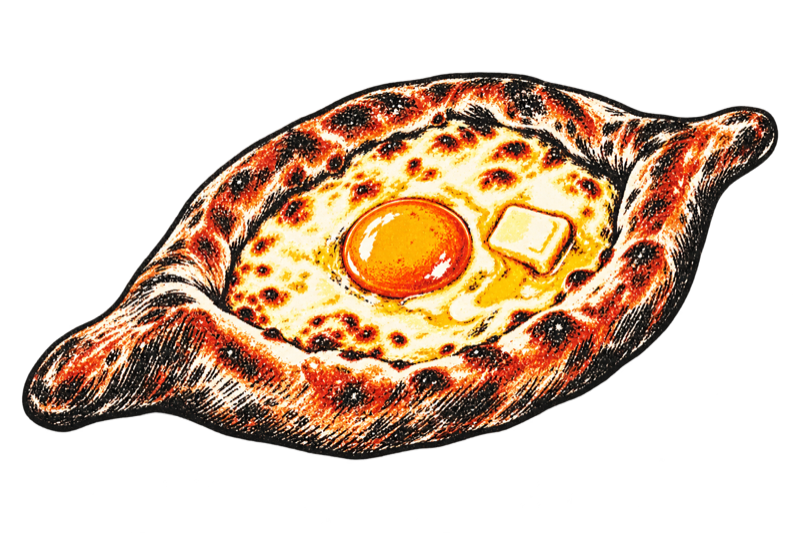
No. 03 bread / cheese / egg
BÁNH MÌ · Vietnam
Bánh mì takes a light, crackling baguette and makes contrast the main ingredient: savoury pâté or meat, pickled daikon and carrot, cucumber, fresh herbs, chile, and mayonnaise or butter. The bread reflects a colonial history; the finished sandwich is unmistakably Vietnamese in its balance of cool, hot, sharp, rich, and crisp. A good one has more than one kind of crunch, and does not let any filling turn the crust soggy.
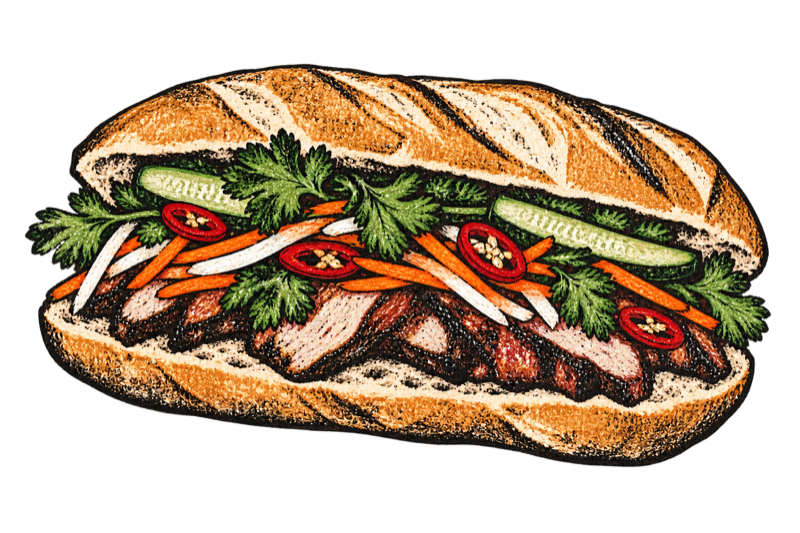
No. 04 baguette / herbs / contrast
RENDANG · West Sumatra, Indonesia
Rendang starts as meat slowly cooked in coconut milk and a spice paste of chiles, aromatics, and herbs. As the liquid reduces, the fat and spices cling to the meat; the final stage is dry rather than saucy, with deep toasted edges. It is often associated with Minangkabau cooking, where the long cook made the dish useful for travel and keeping. The transformation is a reduction, not a rush.
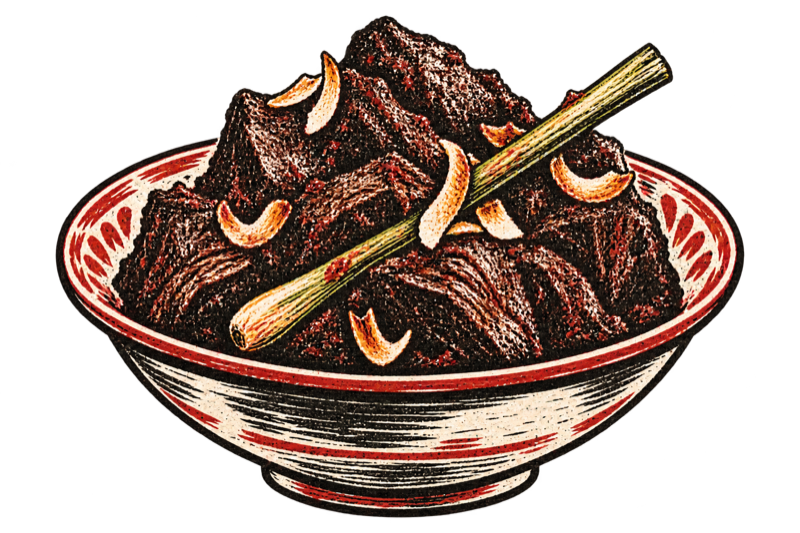
No. 05 coconut / chile / reduction
KOSHARI · Egypt
Koshari stacks rice, lentils, pasta, and chickpeas, then wakes the whole bowl with tomato sauce, sharp garlic-vinegar dressing, and a crown of fried onions. It is a study in humble ingredients made vivid by sequencing: the starches make ballast, the acid cuts through, and the onions provide the last crunch. The portions are generous, but each layer has a different job.
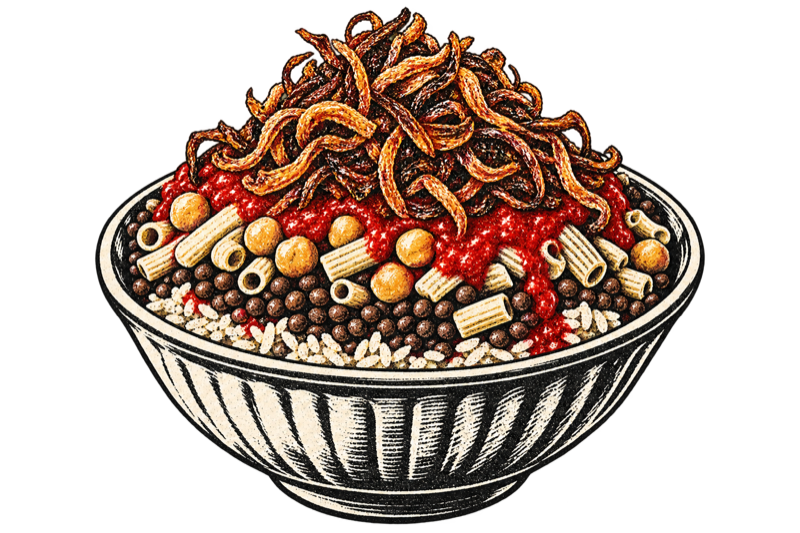
No. 06 lentil / rice / onion
PASTEL DE NATA · Lisbon, Portugal
Pastel de nata is a small custard tart baked hard enough to blister its surface while the laminated shell remains flaky. The custard is scented simply, often with cinnamon or lemon, and should be eaten warm enough that the centre still trembles. The dark spots are not a flaw: they are the caramelized signature of high heat meeting egg custard. A dusting of cinnamon is optional; the contrast of shell and filling is not.

No. 07 custard / pastry / caramel
JOLLOF RICE · West Africa
Jollof rice cooks grains in a concentrated tomato-and-pepper base until every grain turns orange-red and fragrant. Versions differ across West Africa and its diaspora, with lively arguments about texture, seasoning, and the prized layer at the bottom of the pot. Serve it with grilled meat, fish, or vegetables, but the rice is never merely a side. The pot is part of the flavour: slow heat concentrates the sauce into the grain.
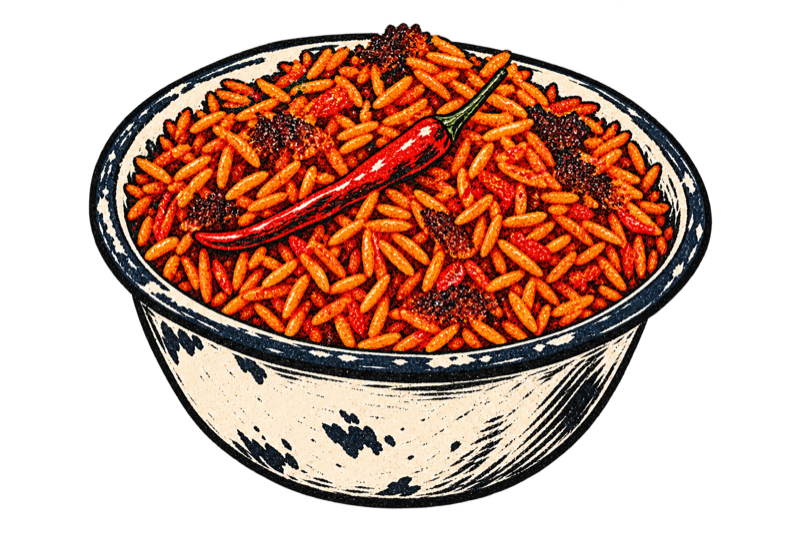
No. 08 tomato / rice / celebration
NATTO · Japan
Natto is fermented soybean food with a sticky, thread-forming coating and a strong, savoury aroma. Stirring it vigorously makes the threads lighter and more abundant; then add soy sauce, mustard, or scallion and spoon it over rice. Its texture asks for attention before its flavour does. The strings are evidence of the ferment, not something to remove.
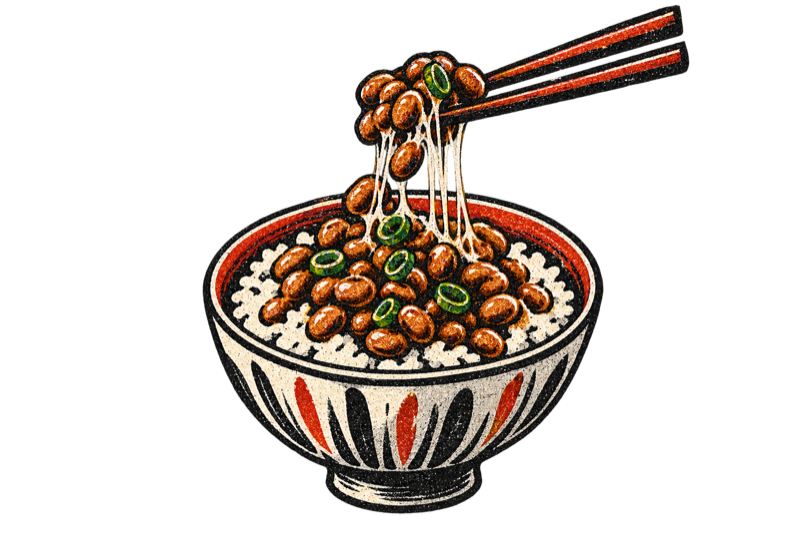
No. 09 soybean / fermentation / mustard
MASALA DOSA · South India
Masala dosa is a thin, crisp crêpe made from fermented rice-and-lentil batter, usually wrapped around a spiced potato filling. The batter spreads on a hot tawa until its edges turn lacy and brittle, then arrives with sambar and chutneys for dipping. The point is the tension between crisp exterior and soft filling. Eat it immediately: steam is the enemy of the griddle-fresh shell.
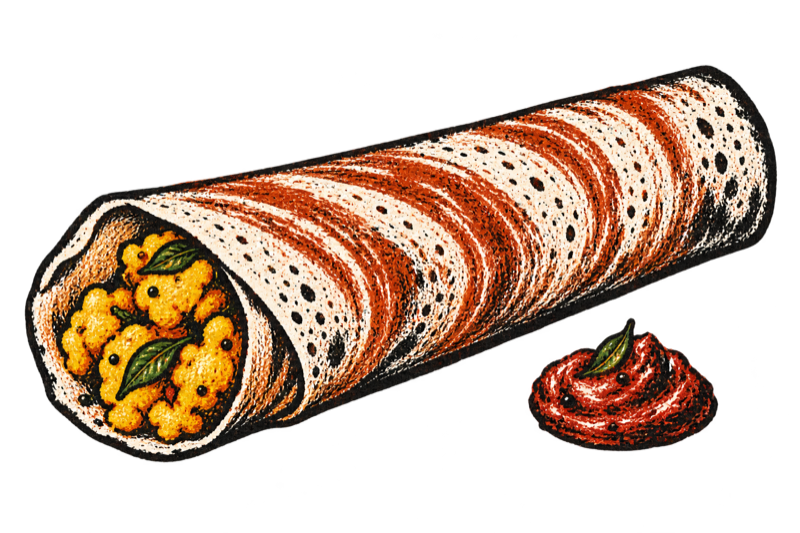
No. 10 rice / lentil / griddle
ACARAJÉ · Bahia, Brazil
Acarajé begins as a seasoned paste of black-eyed peas, peeled, ground, and fried in bright orange-red dendê oil until its crust turns crisp. The fritter is split and filled with vatapá, a rich paste often made with bread, coconut milk, peanuts, and shrimp, then finished with salad and pepper. The contrast is the point: hot shell, soft filling, sharp chile. Dendê is not just frying oil; it gives the food its colour, aroma, and character.
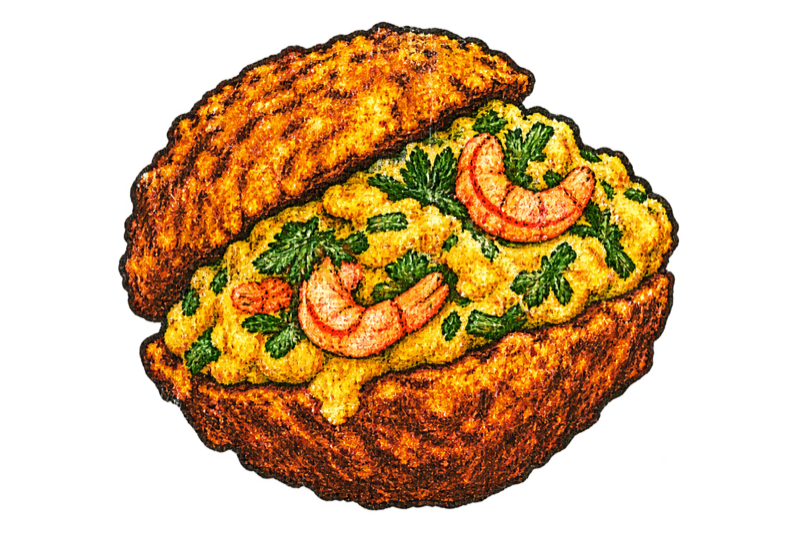
No. 11 black-eyed-pea / dendê / vatapá
HOPPERS · Sri Lanka
Hoppers are bowl-shaped pancakes made from a fermented rice-and-coconut batter, cooked so the centre stays soft while the rim turns thin and lacy. An egg hopper holds one egg in that shallow bowl; sambol brings heat and brightness alongside. The cook gives each hopper just enough time for two textures to arrive together. Eat from the crisp edge inward: the fragile rim is the first thing steam will soften.
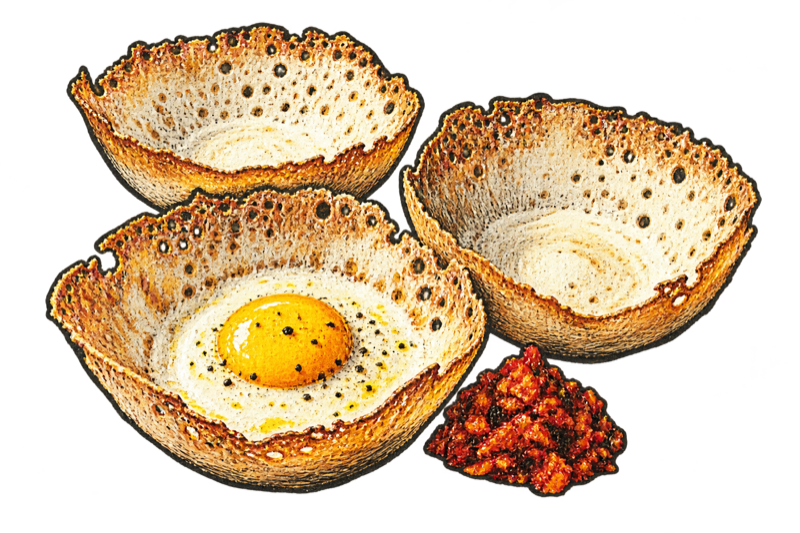
No. 12 rice / coconut / lace-edge