LUDWIG WITTGENSTEIN · Austria / Britain · 1889–1951
Wittgenstein's early Tractatus treats a proposition as a picture of a possible fact, and asks what language can say clearly. Its closing gesture is not another theory but a limit: what cannot be said in propositions is not thereby unimportant. In his later work, especially Philosophical Investigations, he turns from a single logical form toward ordinary practices: words gain their roles in the varied language-games people play. The shift changes philosophy's task. Instead of uncovering a hidden essence behind every word, it can describe how expressions work in forms of life and dissolve confusions made by forcing unlike uses into one pattern. A philosophical problem can be a knot in our use of language. Source: Stanford Encyclopedia of Philosophy.

No. 01 language / use / limits
THOMAS HOBBES · England · 1588–1679
Hobbes begins with motion, sensation, imagination, and language before arriving at politics. People, on this account, are embodied and vulnerable; where no common power can secure them, distrust and competition make a condition of insecurity. His political argument asks what rational people would authorize in order to escape it. In Leviathan, a covenant gives a sovereign the authority needed to keep peace and enforce law. The striking conclusion is not that rulers are naturally glorious, but that security requires a public power able to coordinate people who otherwise have reason to fear one another. The social contract is built from a problem of safety, not from an ideal portrait of civic friendship. Source: Stanford Encyclopedia of Philosophy.

No. 02 sovereignty / fear / covenant
ARROW'S THEOREM · Social choice · 1951
Arrow asks how individual rankings of alternatives can become one social ranking. The requirements are deliberately attractive: the rule should handle every coherent pattern of individual preferences, respect unanimity, avoid handing permanent control to one person, and compare a pair of options without being altered by preferences about irrelevant alternatives. For more than the simplest cases, no rule can meet all of these conditions while always producing a complete, transitive social ordering. The theorem is an impossibility result about a demanding package of conditions, not a proof that collective decisions cannot be made. It makes the trade-offs in voting rules visible: relaxing one requirement changes what a rule can do. Source: Stanford Encyclopedia of Philosophy.

No. 03 voting / ranking / aggregation
PHILIPPA FOOT · England · 1920–2010
Philippa Foot defended the objectivity of moral evaluation against views that reduce moral judgement to expression or command. Her work moves through moral motivation, applied ethics, virtue, and a naturalistic account of goodness. She introduced the trolley problem to separate questions about what may be done from a simple arithmetic of lives saved. In Natural Goodness, Foot compares evaluations of human beings with evaluations of living things: a judgement can concern whether a creature's ways of acting and developing are good for its kind. This does not make morality easy, but it resists the thought that reasons for action are merely optional additions. Moral assessment is connected to the shape of a human life. Source: Stanford Encyclopedia of Philosophy.

No. 04 virtue / reasons / goodness
FRIEDRICH NIETZSCHE · Germany · 1844–1900
Nietzsche is a philosopher and cultural critic of the late nineteenth century whose writing attacks inherited morality, religion, and confidence in supposedly timeless values. His genealogical method asks where a value came from, what psychological needs it serves, and whether its history complicates the authority it claims. His perspectivism does not simply say that every opinion is equally good. It challenges the fantasy of a view from nowhere, and turns attention toward the conditions, drives, and practices through which judgements are made. Values can be examined as achievements with a history, rather than accepted as self-interpreting facts. Critique clears space for a revaluation, not for the end of valuing. Source: Stanford Encyclopedia of Philosophy.

No. 05 value / critique / perspective
JOHN RAWLS · United States · 1921–2002
Rawls's justice as fairness asks which political principles free and equal citizens could accept for the basic structure of their society. The original position makes this question vivid: parties choose without knowing their own social position, talents, or particular conception of the good. The veil of ignorance is a device for testing impartiality, not an account of an actual meeting. The resulting conception joins equal basic liberties to principles that regulate social and economic inequalities. In Rawls's later political liberalism, a just democracy must also live with enduring disagreement among reasonable comprehensive views. Fair terms of cooperation are meant for citizens who differ deeply. Justice is not a bargain struck from a known advantage. Source: Stanford Encyclopedia of Philosophy.
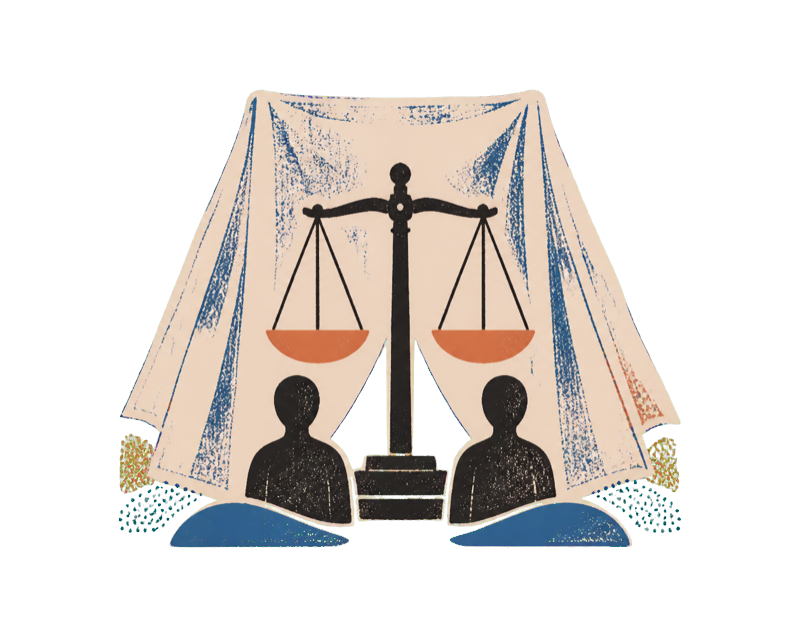
No. 06 justice / fairness / equality
THOMAS KUHN · United States · 1922–1996
Kuhn's The Structure of Scientific Revolutions shifts attention from a smooth accumulation of discoveries to the historical organisation of scientific work. In periods of normal science, a paradigm supplies exemplary problems, standards, and tools; researchers solve puzzles within its established frame. Persistent anomalies can produce a crisis, after which a competing paradigm may reorganise the field. Kuhn called the relation between such periods incommensurable in important respects: their concepts, standards, and perceived problems may lack a simple common measure. A scientific revolution changes the framework for asking questions. The history of science belongs inside its philosophy. Source: Stanford Encyclopedia of Philosophy.

No. 07 paradigm / anomaly / revolution
KARL POPPER · Austria / Britain · 1902–1994
Popper's philosophy of science centres on a problem of demarcation: how can scientific theories differ from views that merely collect confirming instances? He argues that a theory is scientific when it takes risks—when observations could conflict with it. Einstein's theory mattered to Popper because it invited severe tests rather than explaining every possible outcome after the fact. This makes falsifiability a criterion of scientific status, not a recipe for proving a theory false at the first difficulty. Knowledge grows through conjectures, criticism, and attempts at refutation. A strong claim exposes itself to the possibility of failure. Critical testing is more valuable than a growing pile of confirmations. Source: Stanford Encyclopedia of Philosophy.

No. 08 conjecture / test / criticism
ROBERT NOZICK · United States · 1938–2002
In Anarchy, State, and Utopia, Nozick develops a rights-based libertarian political philosophy. Individual rights work as side constraints: they limit what may be done to a person even when a proposed policy promises an attractive aggregate result. This commitment leads him to defend a minimal state concerned with protecting life, liberty, property, and contract. His entitlement theory asks whether holdings arose through just acquisition, voluntary transfer, or necessary rectification of past injustice. It therefore resists judging a distribution only by whether it matches a preferred pattern at a moment in time. Justice in holdings is historical, not just a snapshot. The state may protect rights without becoming an author of every social outcome. Source: Stanford Encyclopedia of Philosophy.

No. 09 rights / entitlement / state
ISAIAH BERLIN · Latvia / Britain · 1909–1997
Berlin's essay Two Concepts of Liberty distinguishes negative liberty—the area in which a person is not interfered with—from positive liberty, often understood as self-direction or collective self-government. The distinction gives political argument a vocabulary for seeing how appeals to freedom can point toward different ideals and different dangers. Berlin's value pluralism adds that human goods may be real yet incompatible: liberty, equality, justice, creativity, belonging, and security cannot always be combined without loss. He opposed the hope that one final principle could harmonise all genuine values. Political judgement must choose among goods that can conflict. Pluralism makes room for loss without making every choice arbitrary. Source: Stanford Encyclopedia of Philosophy.

No. 10 liberty / pluralism / value
AMARTYA SEN · India · 1933
Amartya Sen pioneered the capability approach: a way of assessing well-being and social arrangements by asking what people are genuinely able to do and to be. It shifts attention from resources alone, or from reported happiness alone, to the real opportunities people have to achieve valued functionings. Two people with the same income or public goods can have very different capabilities because of health, disability, social position, institutions, and environment. A bicycle, for example, is not yet the freedom to travel. What matters is the substantive opportunity to use means in a life. Development can be understood as an expansion of real freedoms. Source: Stanford Encyclopedia of Philosophy: The Capability Approach.

No. 11 capability / freedom / wellbeing
DEREK PARFIT · United Kingdom · 1942–2017
Parfit's work on personal identity uses cases of psychological branching to test what matters in survival and self-concern. If two future people are equally psychologically continuous with one present person, numerical identity cannot simply follow both branches. Yet concern for both future people may still seem warranted. The pressure of such cases is reductionist: a person's persistence can consist in more particular facts about memories, intentions, beliefs, desires, and other psychological connections. Parfit's challenge is that psychological continuity may matter more than strict identity for prudence and ethics. The question is not only whether I survive, but what relation makes a future life matter to me. Source: Stanford Encyclopedia of Philosophy: Personal Identity and Ethics.

No. 12 identity / continuity / ethics